



Lielākā daļa cilvēku cenšas ietilpināt 10 minūšu prezentāciju 5 minūtēs. Viņi steidzas, izlaiž pārejas un joprojām pārsniedz laiku. Problēma nav laika plānošanā. Tā ir tā, ka ideja nekad nebija pietiekami skaidra jau no paša sākuma.
Piecas minūtes neslēpj vāju domāšanu. Tās to uzreiz atklāj. Tā patiesībā ir dāvana: ierobežojums liek jums precīzi zināt, ko jūs patiesībā vēlaties pateikt. Ja to izdarīsiet pareizi, piecas minūtes būs vairāk nekā pietiekami.
Lūk, kā panākt, lai katra sekunde būtu svarīga.
Izveidojiet struktūru pirms slaidu ievietošanas
Lielākā kļūda, ko prezentētāji pieļauj, ir slaidu veidošana pirms struktūras izveides. Šeit ir sistēma, kas darbojas vienmēr:
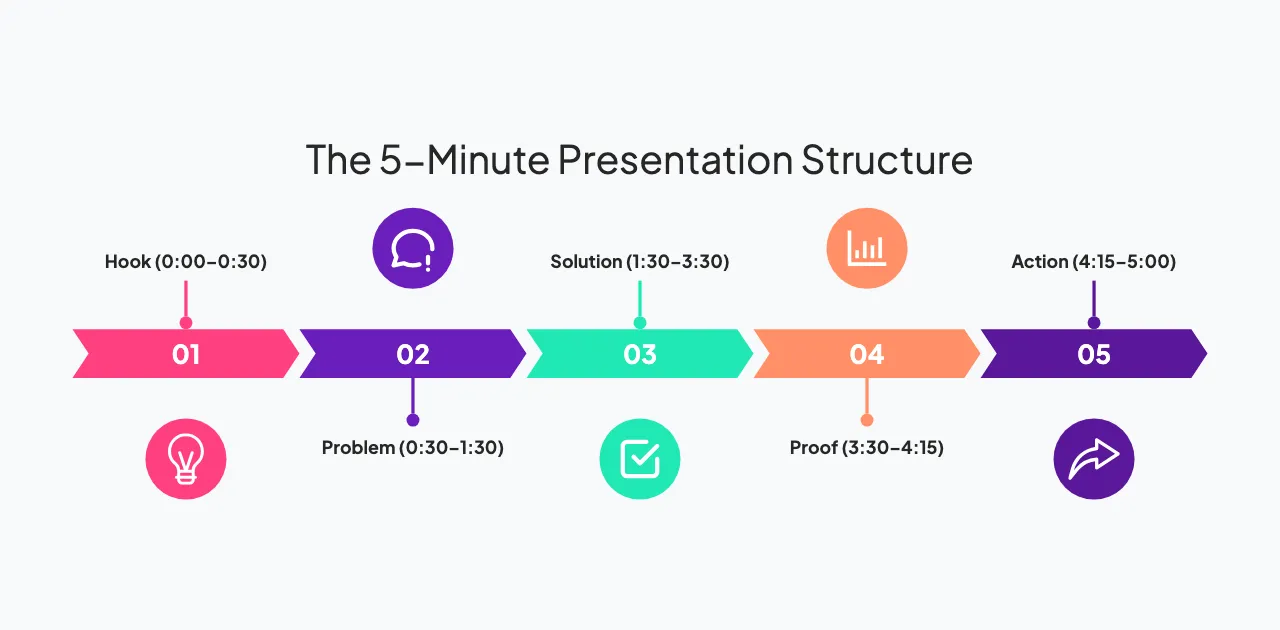
Āķis (0:00–0:30): Jūsu pirmās 30 sekundes izlemiet, vai auditorija patiešām klausīsies nākamās četras ar pusi minūtes. Sāciet ar jautājumu, pārsteidzošu faktu vai atpazītu scenāriju. Izlaidiet "Sveiki, šodien es runāšu par..." un pamēģiniet kaut ko līdzīgu "Vai esat kādreiz sēdējuši prezentācijas laikā un sapratuši, ka pusceļā jums nav ne jausmas, kāda ir tās jēga?"
Problēma (0:30–1:30): Viena minūte, lai noteiktu, kādu izaicinājumu jūs risināsiet. Padariet to konkrētu. Padariet to saprotamu. Kāpēc tas ir svarīgi un kam?
Risinājums (1:30–3:30): Divas pilnas minūtes jūsu galvenajam vēstījumam. Ko jūs ierosināt, kāpēc tas darbojas un kā tas atrisina tikko izklāstīto problēmu? Pamatojiet to ar vienu vai diviem piemēriem, nevis pieciem.
Pieci piemēri nesniedz spēcīgāku argumentu. Tie veido garāku argumentu.
Pierādījums (3:30–4:15): Četrdesmit piecas sekundes pierādījumu. Statistika, gadījuma izpēte, atsauksme, īsa demonstrācija. Izlaidiet šo, un jūsu auditorijai nebūs pamata uzskatīt, ka jūsu risinājums patiešām darbojas.
Aicinājums uz rīcību (4:15–5:00): Pastāstiet viņiem tieši, ko vēlaties, lai viņi darītu. Padomājiet par to. Izmēģiniet šo. Dalieties ar to ar savu komandu. Esiet tiešs. Nekad nebeidziet ar "Paldies par uzklausīšanu" un ceriet, ka viņi atcerēsies, kāpēc viņiem vajadzētu rūpēties.
Jūsu slaidi konkurē ar jums
Kad laika ir maz, instinkts liek piepildīt slaidus ar informāciju, lai nekas netiktu palaists garām. Šis instinkts ir nepareizs. Mazāk slaidu, mazāk teksta, vairāk vietas “elpošanai”.
Lielāko daļu lēmumu aptver viens princips: ja jūsu slaidu varēja izlasīt un saprast bez jūsu klātbūtnes telpā, tas pilda jūsu darbu, nevis to atbalsta. Grafikā, kas attēlo ieņēmumu pieaugumu, uzreiz tiek pastāstīts stāsts. Viens treknrakstā ierakstīts statistikas elements aptur uzmanību. 15 sekunžu garš klips pierāda apgalvojumu praktiskā veidā. Tie kaut ko pievieno. Jūsu runas punktu saraksts nepievieno neko, izņemot iemeslu, lai jūsu auditorija pārtrauktu jūs klausīties.
Viena ideja katrā slaidā. Tiklīdz pievienojat otru domu, jūs sadalāt uzmanību starp lasīšanu un klausīšanos. Jūs zaudēsiet abus.
Uzrakstiet skriptu un pēc tam sagrieziet to
Uzrakstiet pilnu scenāriju, nevis aizzīmju sarakstu, bet gan pilnus teikumus tieši tā, kā tos teiksiet. Pēc tam nosakiet katras sadaļas laiku atsevišķi. Kopējais laika grafiks ir maldinošs. Jūs varat sasniegt 5 minūtes, vienlaikus pavadot 45 sekundes par ilgu sākumam un sasteidzot visu, kas seko. Sadaļu laika grafiks to fiksē.
Tavs pirmais melnraksts gandrīz noteikti ilgs 7 vai 8 minūtes. Samazini to. Veici vienu pārbaudi visam, ko esi uzrakstījis: ja es to izņemšu, vai mana galvenā ideja joprojām nonāks galamērķī? Ja jā, tad tā nonāks galamērķī. Fona konteksts, otrs piemērs, kas pierāda to, ko jau pierādīja pirmais, uzņēmuma vēsture – viss. Tu necenties būt visaptverošs. Piecās minūtēs nav vietas visaptverošam aprakstam.
Tad ieraksti sevi. Lai nekautrētos, lai notvertu ieradumus, kurus neredzi no iekšpuses. Vai tu samazini tempu tieši tad, kad nepieciešams impulss? Vai tu steidzies ar aicinājumu rīkoties, it kā tev tas apkaunotos? Viena atskaņošana atklāj vairāk nekā desmit prāta mēģinājumus.

Izmantojiet tempu kā rīku
Klusums nav tukša gaisotne. Tas ir uzsvars.
Ātra pasniegšana rada auditorijai nemieru. Ja to ievilksiet, jūs viņus pazaudēsiet. Dažāds temps piesaista uzmanību un notur to.
Enerģiskās daļās runājiet ātri. Sarežģītu tekstu skaidrojot, palēniniet tempu. Pirms galvenajiem punktiem ieturiet pauzi. Divas klusuma sekundes jums šķiet garas un jūsu auditorijai tās ir grūti uztveramas. Tas signalizē: pievērsiet uzmanību, tam ir nozīme.
Apzināti iekļaujiet pauzes savā tekstā. Pēc jautājuma apstājieties, lai viņi varētu padomāt. Pēc pārsteidzoša apgalvojuma apstājieties, lai tas iesēstos. Pirms aicinājuma rīkoties apstājieties, lai norādītu uz svarīgumu.
Iesaistiet savu auditoriju pat 5 minūtēs
Piecas minūtes nenozīmē monologu. Mijiedarbībai nav jābremzē. Tā var pastiprināt uzmanību un padarīt jūsu vēstījumu atmiņā paliekošu.
Laicīgi uzdodiet retorisku jautājumu, lai rosinātu cilvēkus domāt. Palūdziet ātri pacelt rokas, lai radītu saiknes brīdi. Ja jums ir brīvas 30 sekundes, uzdodiet īstu jautājumu un ļaujiet kādam atbildēt.
Lielākām vai hibrīdām auditorijām interaktīvie rīki to padara vēl vienkāršāku. Tiešraides aptauja ar jautājumu "Vai jūs to izmantotu?" aizņem 20 sekundes un nekavējoties norāda jums un jūsu auditorijai, kāda ir telpas atrašanās vieta. Vārdu mākonis, kas prezentācijas sākumā kartē cilvēku lielākās problēmas, apgrūtina risinājuma sasniegšanu, kad esat tur nokļuvis. Tādi rīki kā AhaSlides ļauj jums šos mirkļus iestrādāt bez tehniskas iestatīšanas vai plūsmas traucējumiem.
Pieliec punktu gan sākumā, gan beigās
Jūsu pirmajam un pēdējam iespaidam ir lielāks svars nekā visam pa vidu.
Jūsu ievadam 30 sekunžu laikā ir jāliek cilvēkiem domāt: "Man tas ir svarīgi". Tas nedrīkst būt joks, ne tukša saruna, bet gan jautājums, scenārijs vai apgalvojums, kas rada tūlītēju interesi. Auditorija ātri izlemj, vai ieslēgties vai novirzīties no ierastās tēmas. Dodiet viņiem iemeslu palikt.
Jūsu noslēgums ir vienīgā daļa, ko vairums cilvēku skaidri atcerēsies. Lai tas būtu nozīmīgs. Virzieties uz vienu konkrētu darbību, vienu asu pārfrāzējumu vai vienu tiešu izaicinājumu. Nevis "paldies par uzklausīšanu". Nevis "vai ir kādi jautājumi?" Kaut ko tādu, ko viņi var veikt ārpus telpas.
Piecas minūtes nodrošina skaidrību tādā veidā, kā to nekad nevar izdarīt garākos formātos. Ja jūsu vēstījums jau pirms sākat, 5 minūšu ir pilnīgi pietiekami. Ierobežojums ir galvenais. Izmantojiet to.