



Bạn biết cảm giác đó mà. Bạn kết thúc bài thuyết trình, bước ra ngoài, và ngay lập tức tua lại khoảnh khắc bạn bắt đầu vội vã lướt qua slide thứ tư. Hoặc ba phút bạn nhìn chằm chằm vào màn hình thay vì nhìn vào khán phòng. Hoặc phần mở đầu mất đến hai phút mới đi vào trọng tâm vì bạn đã dành chín mươi giây đầu tiên để cảm ơn mọi người và giải thích những gì bạn sắp nói.
Hầu hết các lỗi khi thuyết trình không phải là điều bí ẩn. Chúng có thể dự đoán được, lặp lại và khắc phục được. Vấn đề là rất khó để nhận ra lỗi của chính mình, đặc biệt là ngay lúc đang thuyết trình khi bạn quá bận rộn mà không để ý đến những gì đang sai.
Hướng dẫn này đề cập đến bảy lỗi thường gặp nhất khi thuyết trình trước công chúng, nguyên nhân gây ra từng lỗi và cách khắc phục cụ thể. Không phải lời khuyên chung chung về việc luyện tập nhiều hơn, mà là các kỹ thuật thực tế bạn có thể áp dụng trước bài thuyết trình tiếp theo.
Vì sao lỗi vẫn thường xuyên xảy ra ngay cả ở những diễn giả giàu kinh nghiệm?
Sự thật khó chịu về những lỗi sai khi thuyết trình trước công chúng là chỉ lặp đi lặp lại thôi thì không thể khắc phục được chúng. Bạn có thể thuyết trình hàng trăm lần mà vẫn nói vội khi lo lắng, vẫn dùng những từ ngữ thừa thãi khi lạc đề, vẫn đọc slide khi khán phòng im lặng.
Cách khắc phục sai lầm là sự chú ý có chủ đích. Nhận biết điều gì đang xảy ra, hiểu lý do tại sao, và thực hiện thay đổi cụ thể. Đó là nền tảng của hướng dẫn này.
1. Nói quá nhanh
Hầu hết mọi người không nhận ra mình đang vội. Khi bạn lo lắng, đồng hồ sinh học bên trong cơ thể sẽ chạy nhanh hơn và tốc độ mà bạn cảm thấy bình thường lại nhanh hơn đáng kể so với tốc độ mà người nghe có thể theo dõi một cách thoải mái. Đến khi họ tiếp thu được điểm cuối cùng của bạn, bạn đã đi trước họ hai slide rồi.
Trước khi thuyết trình, hãy đánh dấu kịch bản bằng các chỉ báo tạm dừng ở cuối mỗi điểm chính. Khoảng dừng hai giây có thể khiến bạn cảm thấy khó chịu nhưng lại hoàn toàn tự nhiên đối với khán giả. Hãy luyện tập với tốc độ bằng 75% tốc độ nói bình thường của bạn. Ghi âm lại và nghe lại. Nếu bạn có xu hướng nói nhanh, hãy tạo ra những khoảng dừng có chủ đích sau các số liệu thống kê quan trọng hoặc các tuyên bố quan trọng. Khoảng dừng báo hiệu rằng điều vừa nói đáng để bạn suy ngẫm.
2. Không nhìn vào mắt người đối diện
Việc nhìn vào ghi chú, slide hoặc khoảng cách phía trên đầu khán giả sẽ gửi đi một tín hiệu mà bạn có thể không hề muốn: rằng bạn không thực sự đang nói chuyện với họ. Khán giả sẽ mất hứng thú với những người thuyết trình không nhìn vào họ. Niềm tin giảm sút. Cả khán phòng trở nên thụ động.
Đừng chỉ nghĩ về giao tiếp bằng mắt như một cái nhìn chằm chằm kéo dài, mà hãy nghĩ về nó như một chuỗi những kết nối ngắn ngủi, chân thành. Chọn một người, hoàn thành một suy nghĩ trọn vẹn trong khi nhìn vào họ, rồi chuyển sang người khác. Ba đến năm giây cho mỗi người là đủ. Trong những căn phòng lớn, hãy chia không gian thành các khu vực và luân phiên nhìn vào từng khu vực. Giải pháp thực tế cho những người thuyết trình thường dựa vào ghi chú là nắm vững nội dung bài thuyết trình đến mức không cần đến chúng như một chỗ dựa. Ghi chú bài thuyết trình chỉ để nhắc nhở bạn về cấu trúc, chứ không phải để đọc to.
3. Sử dụng từ ngữ thừa
Ừm, ờ, kiểu như, bạn biết đấy, vậy nên... Từ đệm là những gì xảy ra khi miệng bạn cứ nói liên tục trong khi não bạn vẫn chưa kịp phản hồi. Chúng thường vô hình đối với người nói nhưng lại dễ dàng nhận thấy đối với người nghe. Nếu dùng quá nhiều từ đệm, uy tín của bạn sẽ âm thầm bị suy giảm, không phải vì những gì bạn đang nói, mà vì những từ ngữ lấp đầy khoảng trống giữa các câu.
Bước đầu tiên là nhận thức. Hầu hết mọi người không biết mình dùng từ đệm thường xuyên như thế nào cho đến khi nghe lại bản ghi âm giọng nói của chính mình. Một khi bạn nhận ra thói quen của mình, cách khắc phục tuy khó chịu nhưng rất đơn giản: thay thế từ đệm bằng sự im lặng. Khi bạn cảm thấy muốn nói "ừm", hãy im lặng thay vào đó. Một khoảng lặng ngắn nghe tự tin hơn là một từ đệm và cho người nghe một khoảnh khắc để tiếp thu những gì bạn vừa nói. Hãy luyện tập điều này trong những cuộc trò chuyện không quá quan trọng, không chỉ trong các bài thuyết trình. Thói quen này sẽ được hình thành ngay cả khi không ở trong phòng họp.
4. Ngôn ngữ cơ thể kém
Ngôn ngữ cơ thể của bạn luôn truyền đạt thông tin trong suốt quá trình thuyết trình, dù bạn có chú ý hay không. Tư thế cứng nhắc báo hiệu sự lo lắng. Cử động liên tục báo hiệu sự căng thẳng. Khoanh tay báo hiệu sự phòng thủ. Không điều nào trong số này là ấn tượng bạn muốn tạo ra, nhưng chúng tự động xảy ra khi bạn tập trung vào nội dung và bỏ qua mọi thứ khác.
Hãy bắt đầu từ tư thế đứng. Đặt hai chân rộng bằng vai và tránh di chuyển, đi lại hoặc lắc lư. Việc di chuyển cần có chủ đích, được sử dụng để chuyển tiếp giữa các khu vực hoặc tương tác với các phần khác của căn phòng, chứ không phải là một thói quen lo lắng. Giữ hai tay thả lỏng hai bên khi không cử chỉ. Khi cử chỉ, hãy thực hiện một cách có chủ đích và phù hợp với không gian. Những cử chỉ nhỏ trong không gian rộng sẽ bị chìm khuất. Những cử chỉ lớn trong không gian nhỏ lại tạo cảm giác hung hăng.
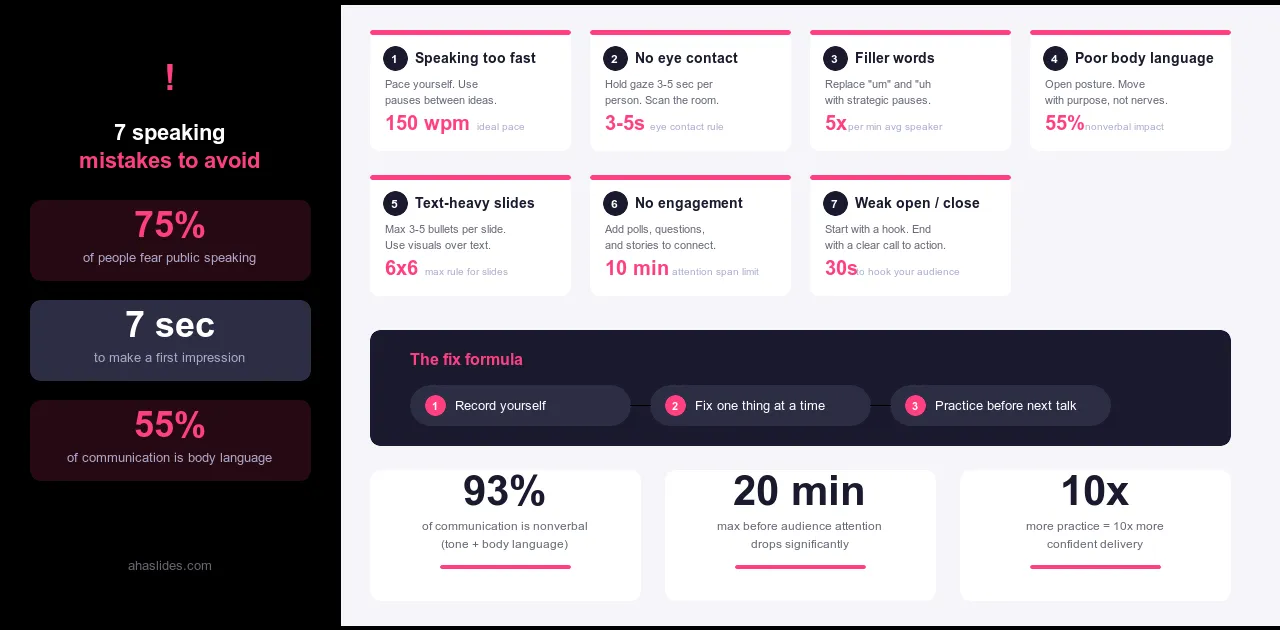
5. Quá tải nội dung văn bản trên slide
Những slide chứa quá nhiều chữ tạo ra một lựa chọn khó khăn cho người nghe: đọc slide hay lắng nghe bạn. Hầu hết sẽ đọc. Điều đó có nghĩa là ngay khi bạn đưa một khối lượng lớn chữ lên màn hình, bạn đã mất đi không gian dành cho chính slide của mình.
Hãy áp dụng quy tắc 7x7: không quá bảy gạch đầu dòng trên mỗi slide, không quá bảy từ cho mỗi gạch đầu dòng. Tốt hơn nữa, hãy đặt mục tiêu thấp hơn. Một ý tưởng trên mỗi slide với một hình ảnh trực quan mạnh mẽ sẽ hiệu quả hơn tám gạch đầu dòng và một bức ảnh minh họa. Hãy đưa phần chi tiết vào ghi chú thuyết trình của bạn, nơi nó thuộc về. Các slide của bạn nên khuyến khích khán giả lắng nghe bạn, chứ không phải thay thế bạn. Nếu các slide của bạn có thể tự đứng vững mà không cần bạn thuyết trình, thì chúng đang làm quá nhiều việc.
6. Bỏ qua sự tương tác của khán giả
Nói chuyện một chiều với người nghe trong bốn mươi lăm phút và mong họ tập trung lắng nghe là điều quá lạc quan. Sự chú ý sẽ bị phân tán. Điện thoại sẽ xuất hiện. Hình thức nghe thụ động mà hầu hết các bài thuyết trình thường sử dụng cũng là hình thức ít có khả năng tạo ra sự ghi nhớ, hành động hoặc bất kỳ kết quả có ý nghĩa nào ngoài những tràng vỗ tay lịch sự ở cuối bài.
Hãy khuyến khích sự tham gia của người nghe trước khi bạn trình bày, chứ không phải là thêm vào sau đó. Xác định hai hoặc ba thời điểm tự nhiên trong buổi thuyết trình mà việc đặt câu hỏi, thăm dò ý kiến hoặc thảo luận sẽ củng cố nội dung thay vì làm gián đoạn nó. Hãy yêu cầu người tham gia giơ tay. Đặt một câu hỏi chân thành và chờ câu trả lời thay vì tự mình đưa ra câu trả lời ngay lập tức.
Các công cụ như AhaSlides biến điều này thành hiện thực chứ không chỉ là lý tưởng. Các cuộc thăm dò ý kiến trực tiếp, đám mây từ khóa và tính năng hỏi đáp có thể được tích hợp trực tiếp vào quy trình thuyết trình của bạn, giúp người tham gia cảm thấy đó là một phần của buổi thuyết trình chứ không phải là một sự lạc đề. Khán giả nhớ những gì họ tương tác. Họ quên những gì họ đã ngồi nghe.
7. Mở hoặc đóng yếu
Phần mở đầu là lúc khán giả quyết định xem họ có chú ý hay không. Phần kết thúc là những gì họ mang theo khi rời khỏi phòng. Cả hai đều quan trọng hơn nhiều so với thời gian chúng chiếm dụng, và cả hai đều là phần mà hầu hết các bài thuyết trình yếu nhất.
Đối với phần mở đầu: hãy bỏ qua phần lời dẫn nhập. Đừng cảm ơn ban tổ chức, đừng giới thiệu bản thân dài dòng, hoặc giải thích nội dung sắp trình bày trước khi bắt đầu. Hãy bắt đầu bằng điều gì đó thu hút sự chú ý ngay lập tức: một tình huống cụ thể, một nhận xét bất ngờ, hoặc một câu hỏi khiến khán giả phải suy nghĩ. Bạn chỉ có khoảng ba mươi giây. Hãy tận dụng chúng.
Đối với phần kết luận: hãy viết câu cuối cùng trước khi viết bất cứ điều gì khác. Phần kết luận yếu kém thường xảy ra vì người thuyết trình hết ý tưởng và ứng biến để kết thúc. Hãy biết chính xác bạn sẽ kết thúc như thế nào trước khi bắt đầu. Kết thúc bằng một lời kêu gọi hành động cụ thể, một câu hỏi đáng suy ngẫm, hoặc một câu ngắn gọn tóm gọn điều bạn muốn khán giả ghi nhớ nhất. Sau đó dừng lại. Bản năng muốn tiếp tục nói sau khi đã kết thúc chính là điều biến những bài thuyết trình hay thành những bài thuyết trình dễ bị lãng quên.

Làm thế nào để nhận biết những sai lầm của chính mình?
Phần khó nhất khi sửa lỗi thuyết trình là hầu hết chúng đều không thể nhận ra ngay lúc đó. Bạn không thể nghe thấy những từ thừa của chính mình khi đang tập trung vào nội dung. Bạn không nhận ra mình đang vội vàng khi adrenaline khiến mọi thứ có vẻ bình thường. Bạn không thể nhìn thấy ngôn ngữ cơ thể của chính mình trong khi đang thuyết trình.
Có ba điều sau đây sẽ giúp ích.
Hãy tự ghi âm bài thuyết trình của mình và xem lại. Không phải để tự trách móc bản thân quá mức, mà để xem điều gì thực sự đang diễn ra. Những thói quen mà bạn không hề hay biết sẽ trở nên rõ ràng trên bản ghi âm. Hầu hết mọi người đều tự phê bình bản thân khắt khe hơn so với khán giả khi xem trực tiếp, điều đó có nghĩa là bản ghi âm hầu như luôn hữu ích hơn là gây hại.
Hãy hỏi người nào đó sẽ nói cho bạn sự thật. Một đồng nghiệp đáng tin cậy, một người hướng dẫn, hoặc bất cứ ai sẽ cho bạn phản hồi trung thực thay vì chỉ là lời trấn an. Câu "Tuyệt vời" không nói lên điều gì cả. Câu "Bạn nhìn vào màn hình mỗi khi chuyển sang slide mới" cho bạn biết điều gì đó bạn có thể khắc phục.
Hãy tập trung vào từng việc một. Nếu bạn cố gắng sửa đổi tốc độ nói, giao tiếp bằng mắt, từ ngữ thừa và ngôn ngữ cơ thể cùng một lúc, bạn sẽ không sửa được cái nào cả. Hãy chọn vấn đề quan trọng nhất, tập trung vào nó trong hai hoặc ba bài thuyết trình tiếp theo, và chuyển sang vấn đề khác khi bạn không còn phải suy nghĩ về nó nữa.
Kết thúc
Mọi lỗi sai trong danh sách này đều có một điểm chung: chúng đều có thể sửa chữa được. Không phải bằng những lời khuyên chung chung kiểu "luyện tập nhiều hơn", mà bằng những thay đổi cụ thể, có chủ đích, được áp dụng từng bước một.
Hãy chú ý đến một điều gì đó không ổn sau bài thuyết trình tiếp theo của bạn. Viết nó xuống trước khi trí nhớ phai mờ. Áp dụng một biện pháp khắc phục. Xem những thay đổi.
Đó là toàn bộ quá trình. Theo thời gian, danh sách những thứ cần sửa chữa sẽ ngắn lại. Danh sách những thứ hoạt động tốt sẽ dài ra. Và đến một lúc nào đó, bạn sẽ ngừng suy nghĩ về những sai lầm trên đường trở lại bàn làm việc và bắt đầu nghĩ về những gì bạn muốn làm khác đi vào lần sau.
Đó là lúc bạn bắt đầu cảm thấy có sự tiến bộ.