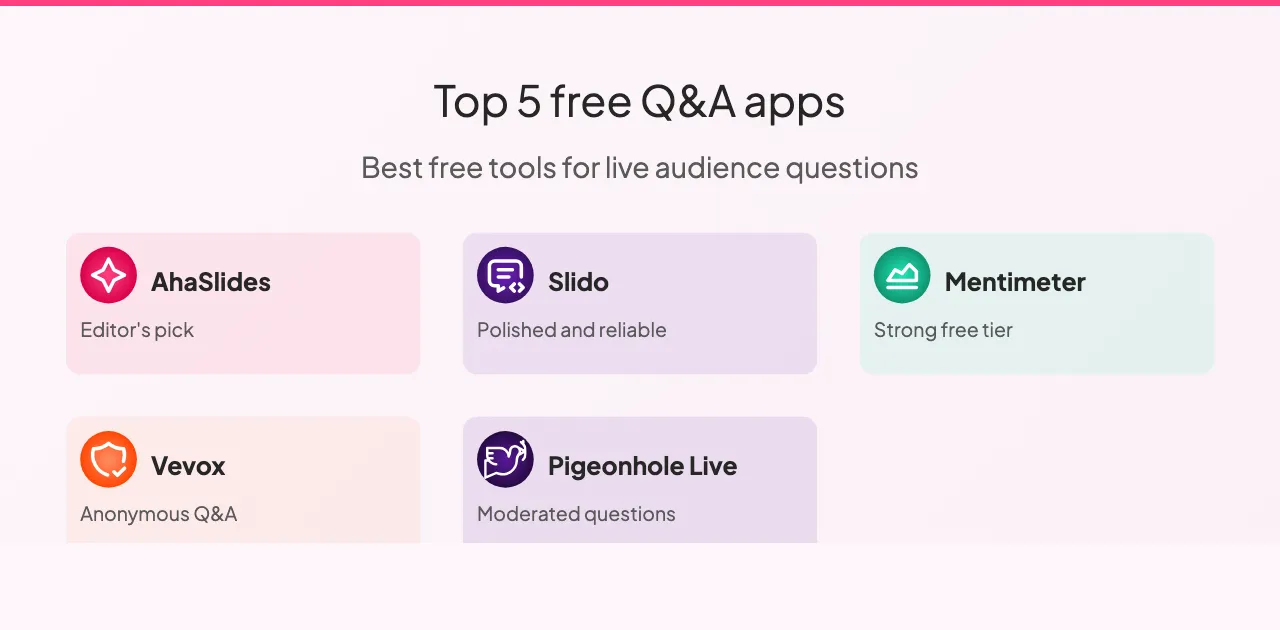


Interactive Q&A is essential for 引人入勝的演講. But manually managing raised hands, reading questions aloud, and tracking which topics got asked multiple times is exhausting. Digital Q&A tools solve this problem. They collect questions, let audiences upvote priorities, enable anonymous submission, and provide real-time analytics.
The market has dozens of options. This guide compares five of the best tools used by presenters across education, corporate, and event settings. We'll examine features, pricing, ease of use, and which audiences benefit most from each.
How to choose the right Q&A app
Before comparing specific tools, consider what matters for your presentations:
Moderation features: Do you need to filter or edit questions before they appear? Can you delete inappropriate submissions? This matters for sensitive topics.
Anonymous submission: Can audiences ask questions without revealing their identity? Anonymous submissions increase participation rates significantly.
Upvoting system: Can audiences vote on which questions they want answered first? This helps prioritize the most relevant topics.
實時分析: Does the tool show you engagement metrics, question frequency, and audience sentiment? These insights improve future presentations.
易於設定: Can you launch a Q&A session in under five minutes? Or does setup require extensive configuration?
觀眾規模: Does the free tier support your expected attendance? Some platforms cap at 50 participants while others allow hundreds.
整合化: Do you need the tool to work with your 演示軟件 (PowerPoint, Google Slides)? Or can it function standalone?
Let's examine five solid options and see which fits different use cases best.
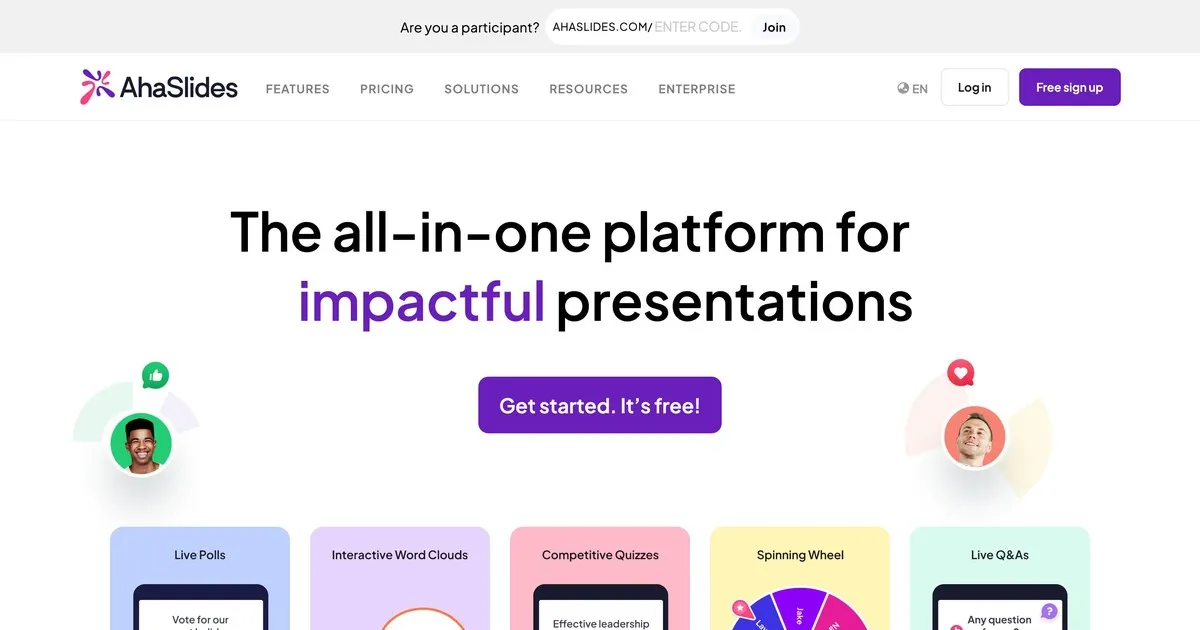
1. AhaSlides: best for integrated presentations
最適合: Teachers, corporate trainers, and presenters using interactive slides
免費計劃: Supports up to 50 participants, unlimited presentations, basic Q&A, polls, and quizzes
付費計劃: Start at $7.95/month for 100 participants, advancing to enterprise options
AhaSlides combines Q&A with broader presentation interactivity. You're not just collecting questions. You can embed polls, 詞云, and quizzes directly into slides. This integration matters when engagement isn't just about answering questions but about building interactive moments throughout your entire presentation.
主要優勢: Easy slide integration, beautiful presentation templates, real-time audience responses visible on your slides, leaderboards for gamified content, custom branding options.
Moderation and privacy: You can review questions before they appear on screen. Anonymous submission is built in, removing audience hesitation.
分析: AhaSlides provides detailed engagement reports. You see which questions got asked, how many people engaged, and audience sentiment over time.
學習曲線: Minimal. You can create a presentation and launch Q&A functionality within minutes.
最佳用例: A sales trainer running weekly onboarding sessions wants to gauge understanding with polls and collect team questions simultaneously. AhaSlides lets them do both seamlessly. The trainer sees real-time engagement data and can adjust pacing based on where audiences struggle most.
2. Slido: best for large corporate events
最適合: Conferences, all-hands meetings, large corporate presentations
免費計劃: Supports 100 participants, 3 polls, basic question management
付費計劃: Business plans start at $17.50/month for unlimited participants and advanced moderation
Slido specializes in question collection and prioritization. While it also offers polls and surveys, the Q&A functionality is what sets it apart. The platform excels at helping presenters manage hundreds of questions from hundreds of participants.
主要優勢: Question filtering and moderation controls, audience upvoting to prioritize questions, detailed analytics on questions asked, integration with major presentation platforms, clean, simple interface.
Moderation and privacy: You moderate each question before it displays publicly. Audiences can submit anonymously. You can group similar questions, delete spam, and merge duplicates.
分析: Detailed reporting on engagement, question themes, and audience sentiment. Post-event reports help you understand what your audience cared about most.
學習曲線: Straightforward. Setup takes a few minutes. The interface emphasizes clarity over feature overload.
最佳用例: A company hosts a quarterly earnings call with 1,000 employees. Managers can't possibly answer all questions in real-time. Slido lets employees submit questions, upvote the most important ones, and the executive team works through the highest-priority questions. The moderation team filters spam and ensures questions are professional. Post-event, management reviews the analytics to see what workforce concerns are rising.
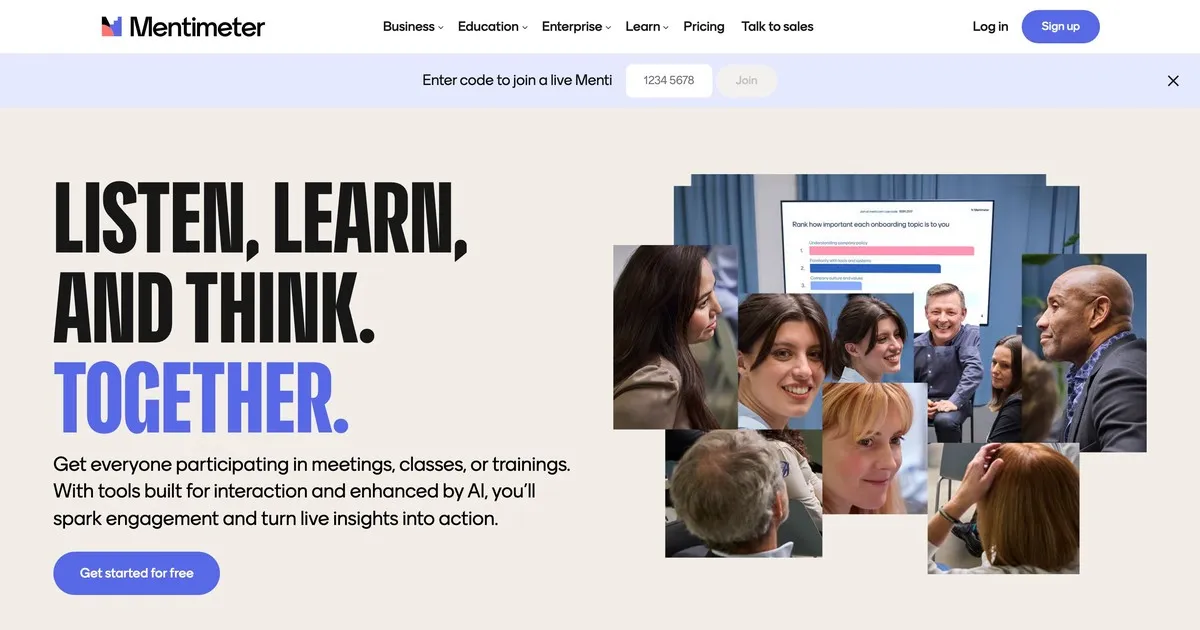
3. Mentimeter: best for classroom engagement
最適合: Teachers, trainers, and educators at all levels
免費計劃: Supports 50 participants monthly, up to 5 presentations, basic Q&A and polling
付費計劃: Business plans from $12.50/month for unlimited participants
Mentimeter ("Menti") started in education and still excels there. Teachers love it because it's intuitive, requires minimal setup, and makes classrooms feel interactive and modern. The Q&A functionality is solid, though the tool shines for quick polls and live engagement checks.
主要優勢: Mobile-friendly audience interface, quick setup (launches in seconds), visually appealing display, real-time visualization of responses, works offline, integrates with learning management systems.
Moderation and privacy: Anonymous submissions available. You moderate before questions appear or allow live submissions depending on your preference.
分析: Reports show engagement metrics and response patterns. Teachers can export data for learning outcome assessment.
學習曲線: Extremely low. Educators without tech experience can set up Mentimeter without frustration.
最佳用例: A teacher wants to assess student understanding in real-time. She uses Menti for quick polls during lectures ("Does everyone understand this concept?"), then opens a Q&A segment for students to ask questions anonymously. Students feel safe asking questions without peer judgment. The teacher sees exactly which concepts need re-teaching based on questions asked.
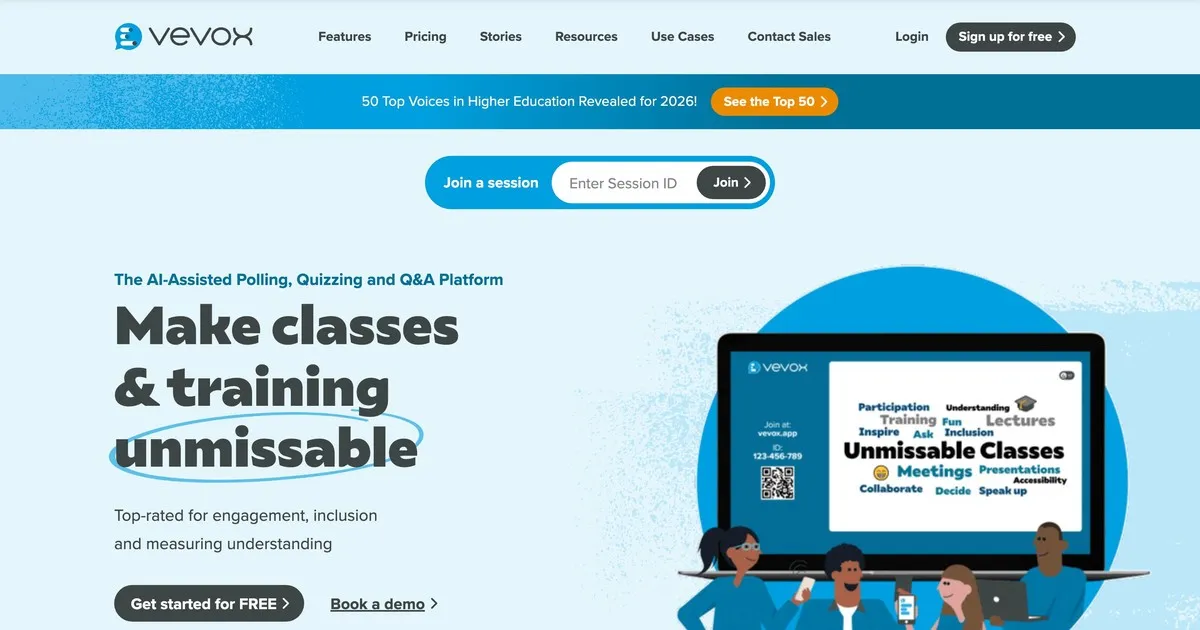
4. Vevox: best for educational institutions
最適合: Higher education, K-12 schools, educational training programs
免費計劃: Basic features, limited to small groups
付費計劃: Education pricing from $7.75/month per course, volume discounts available
Vevox prioritizes function over flashy design. It's built specifically for educational settings with moderation features that teachers and professors need. The platform emphasizes clean question management and simple, reliable interaction.
主要優勢: Strong moderation controls, question filtering, anonymous submission, works across devices, reliable uptime, affordable education pricing.
Moderation and privacy: Instructor-friendly moderation. Teachers can review, edit, or delete questions before students see them. Anonymous submission is the default.
分析: Reports track student engagement and question patterns. Data helps educators understand comprehension gaps.
學習曲線: Straightforward but requires more clicks than some competitors. Teachers need to explore the interface slightly, but nothing complex.
最佳用例: A university professor teaching a large lecture wants to encourage participation from 200 students. Vevox lets students ask anonymously, removing anxiety. The professor's teaching assistant monitors questions, grouping similar ones. The professor addresses the top five questions after each lecture segment. Students feel heard, and the professor adjusts future lectures based on what students didn't understand.
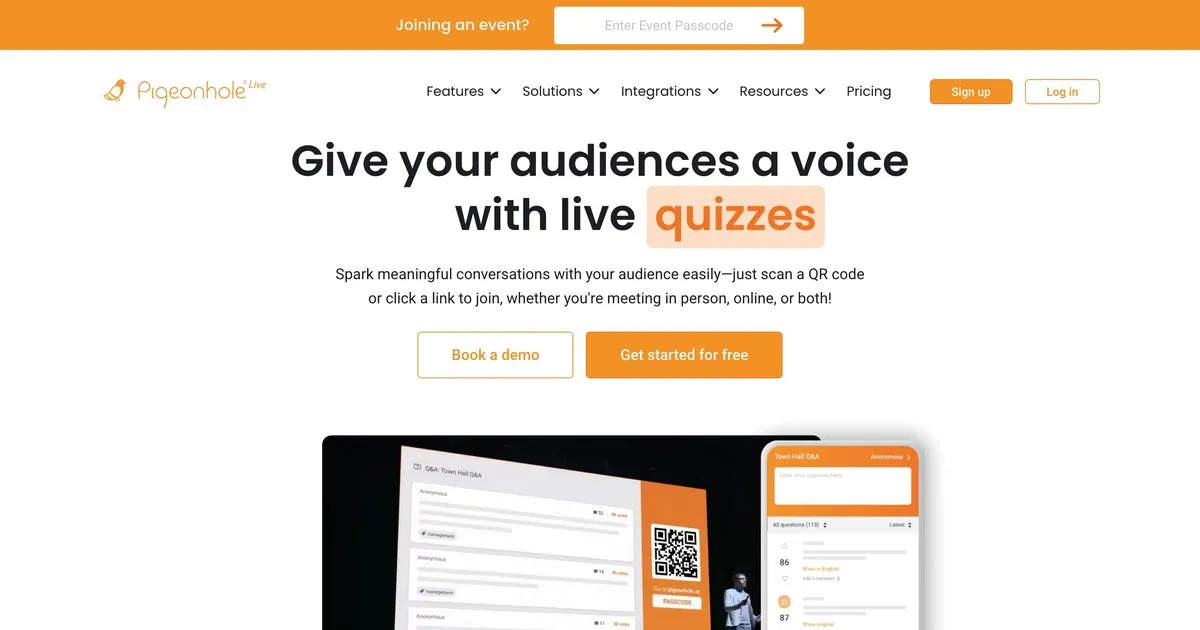
5. Pigeonhole Live: best for multi-session events
最適合: Conferences, multi-day events, complex event structures
免費計劃: Limited, primarily paid pricing model
付費計劃: Pricing similar to Vevox, with features scaling by event size
Pigeonhole handles the complexity of large, multi-track conferences. If your event has dozens of sessions happening simultaneously, each with different speakers and timing, Pigeonhole manages that logistical complexity gracefully.
主要優勢: Multi-session management, session-specific Q&A, speaker-facing questions, analytics across sessions, moderator controls, custom branding.
Moderation and privacy: Comprehensive moderation tools. Organizers can route questions to specific speakers, filter content, and prevent duplicate questions.
分析: Event-level analytics showing which sessions generated most engagement, which topics drew questions, and speaker performance data.
學習曲線: Moderate. Setup is more involved than smaller tools because of the complexity it handles.
最佳用例: A three-day marketing conference has 40 sessions across 4 rooms. Each session has a 30-minute talk plus 10-minute Q&A. Pigeonhole routes audience questions to the correct speaker at the correct session. Attendees can also ask questions across sessions. The conference team reviews high-engagement topics afterward to shape future conference themes.
功能比較表
| 獨特之處 | 啊哈幻燈片 | 斯利多 | Mentimeter | 維沃克斯 | 鴿子洞 |
|---|---|---|---|---|---|
| 匿名提問 | 可以 | 可以 | 可以 | 可以 | 可以 |
| Audience upvoting | 可以 | 可以 | 可以 | 有限 | 可以 |
| 審核工具 | 可以 | 優 | 可以 | 強大 | 優 |
| 實時分析 | 可以 | 可以 | 可以 | Basic | 進階功能 |
| Free tier participants | 50 | 100 | 50 | 有限 | 無 |
| Slide integration | 本地人 | 可以 | 有限 | 沒有 | 沒有 |
| 易於設置 | 很容易 | 容易 | 很容易 | 中度 | 中度 |
Pricing summary
Best for small budgets: All five tools offer free tiers supporting 50-100 participants. AhaSlides and Mentimeter are most generous with free features.
最物有所值: AhaSlides and Vevox offer strong features at accessible price points. Expect to pay $7-12/month for small team plans.
Enterprise options: Slido and Pigeonhole offer extensive custom pricing for organizations hosting frequent large events. Contact sales for quotes above 500 participants.
How to maximize any Q&A tool
Regardless which platform you choose, certain strategies boost effectiveness:
Test before presenting: Run a quick test session to confirm setup, check your internet connection, and familiarize yourself with the interface. Last-minute surprises during your presentation distract from content.
Explain the process early: Tell your audience where questions go, how to submit them, and whether they'll remain anonymous. This clarity increases participation rates.
Show questions on screen: Display submitted questions where everyone can see them. This transparency keeps engagement high. People see what others are curious about.
Read questions aloud: Even if they're visible on screen, reading them maintains conversational flow and ensures everyone heard the question.
Acknowledge all questions: Even if you don't answer everything during the session, acknowledge each question. "That's a great point. Let me make sure I got that down for follow-up."
Review analytics afterward: Most platforms provide reports. Review them to understand audience needs and adjust future presentations.
常見的錯誤,以避免
Launching without explaining: If your audience doesn't know how to use the tool, they won't. Spend 30 seconds explaining where they'll see questions and how their participation works.
Ignoring questions: If you collect questions but never address them, audiences feel dismissed. Make answering questions a visible part of your presentation.
Allowing spam: Without moderation, inappropriate questions can derail your session. Use moderation features, especially for larger audiences or sensitive topics.
Going over time: Allocate specific time to Q&A and stick to it. Presentations that run long feel disrespectful to your audience's schedule.
Showing favorites: Acknowledge good questions without being patronizing. Let engagement flow naturally rather than calling out specific audience members.
入門
Start with the free tier of whichever platform appeals to you. Most sign-ups take two minutes. Create a test presentation, invite a friend, and run through the experience. You'll quickly feel which tool matches your style and needs.
For single presentations or small groups, AhaSlides and Mentimeter offer the fastest setup with the most polished experience. For frequent, large events, Slido and Pigeonhole provide enterprise-grade features worth the investment.
The specific tool matters less than committing to interactive Q&A. When audiences know you welcome their questions, participate anonymously, and see their input valued, engagement skyrockets. Choose any of these five platforms and you'll elevate your presentations immediately.