


你一定有過這種感覺。做完演講,走下講台,腦海裡立刻浮現出你開始匆匆翻閱第四張投影片的那一刻。或是你盯著螢幕而不是房間裡其他人的三分鐘。又或者,你花了整整兩分鐘才進入正題,因為你花了前九十秒感謝大家,並解釋接下來要講的內容。
大多數演講錯誤並不神秘。它們是可以預測的、可以重複的,也是可以修正的。問題在於,我們很難發現自己的錯誤,尤其是在演講過程中,當我們忙於演講而無暇顧及哪裡出了問題時。
本指南涵蓋了公開演講中最常見的七個錯誤,分析了每個錯誤的原因,並提供了具體的解決方法。這裡沒有泛泛的練習建議,而是提供一些你可以在下次演講前實際應用的技巧。
為什麼經驗豐富的演講者也會犯錯
公開演講中一個令人不安的事實是,單靠重複練習並不能糾正錯誤。即使你做過一百次演講,緊張時仍然會語速過快,思路中斷時仍然會用一些語氣詞,聽眾安靜下來時仍然會不自覺地照著幻燈片念。
糾正錯誤的關鍵在於有意識的關注。注意到發生了什麼,理解原因,並做出具體的改變。本指南正是圍繞著這一點展開的。
1. 說話太快
大多數人都不知道自己在趕時間。緊張的時候,你的生理時鐘會加快,你感覺正常的節奏,實際上比聽眾能輕鬆跟上的節奏快得多。等他們消化完你上一個重點,你已經講完兩張投影片了。
在演講前,在每個要點的結尾處標記停頓點。兩秒鐘的停頓對你來說可能感覺太長,但對聽眾來說卻很自然。練習時,語速保持在正常語速的75%。錄下自己的演講並回聽。如果你容易語速過快,可以在關鍵數據或重要論點後刻意停頓。停頓能表示剛才所說的話值得仔細思考。
2. 不進行眼神交流
看著筆記、幻燈片,或是目光越過觀眾頭頂的遠處,會傳遞出一個你可能不想傳遞的訊號:你並沒有真正和他們交流。觀眾會因為演講者不看他們而失去興趣,信任度下降,現場氣氛變得沉悶。
不要再把眼神交流理解為長時間的凝視,而應該把它看作一系列短暫而真誠的互動。選擇一個人,看著他/她完整地表達一個想法,然後移向另一個人。每個人三到五秒鐘就夠了。在較大的房間裡,可以將空間劃分成幾個區域,然後輪流與不同的人交流。對於那些習慣依賴講稿的演講者來說,一個切實可行的解決方法是:對自己的演講內容足夠熟悉,以至於不需要講稿的輔助。講稿的功能是提醒你演講的結構,而不是用來朗讀的。
3. 使用填充詞
嗯,呃,你知道,就是那種語氣詞。語氣詞是指說話時嘴巴一直在動,大腦卻跟不上節奏時產生的。說話者通常意識不到這些語調詞的存在,但聽眾卻能立刻察覺。如果語氣詞用得太多,你的可信度就會悄悄下降,這並非因為你說了什麼,而是因為你用這些語氣字填補了話語間的空白。
第一步是覺察。大多數人直到聽到自己的錄音,才意識到自己使用語氣詞的頻率。一旦你了解了自己的語氣模式,解決方法雖然不太舒服,但卻很簡單:用沉默代替語氣詞。當你想說「嗯」的時候,就什麼也別說。短暫的沉默比語氣詞聽起來更有自信,也能給聽眾一點時間消化你剛才說的話。在無關緊要的對話中練習這種方法,而不僅僅是在演講中。習慣是在聚光燈之外培養的。
4. 肢體語言不良
無論你是否注意到,你的身體在你演講過程中始終都在傳遞訊息。僵硬的姿勢會傳遞焦慮的訊息。不停地動來動去會傳遞緊張的訊息。雙臂交叉會傳遞防禦的訊息。這些都不是你想要給人留下的印象,但當你專注於演講內容而忽略其他一切時,這些情況就會自動發生。
首先從你的雙腳開始。雙腳與肩同寬站立,克制住挪動、踱步或搖晃的衝動。動作應該是有意識的,用於在不同區域間轉換或與房間的其他部分互動,而不是緊張時的習慣性動作。不做手勢時,雙臂自然垂在身體兩側。做手勢時,動作要自然,並根據房間的大小和風格進行調整。在大空間裡做小手勢容易被忽略,在小空間裡做大手勢則會顯得咄咄逼人。
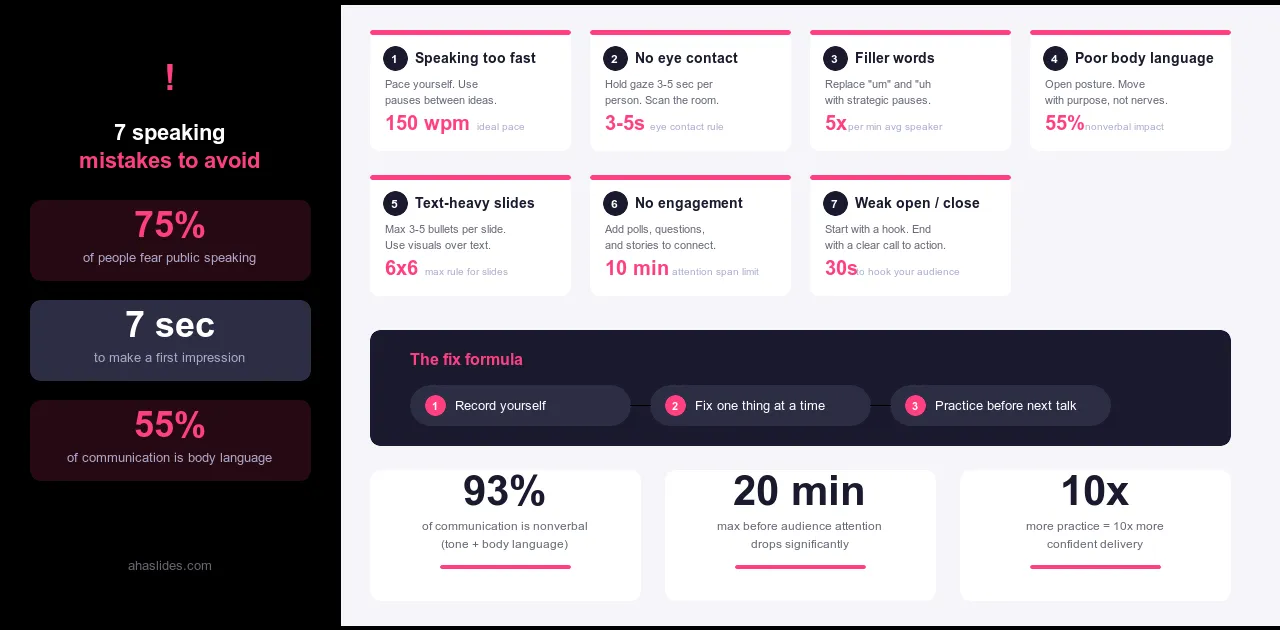
5. 幻燈片文字過多
文字過多的幻燈片會讓觀眾面臨兩難:要麼閱讀幻燈片上的文字,要麼聽你講解。大多數人會選擇閱讀。這意味著,一旦你在螢幕上堆砌了一大堆文字,你就失去了展示幻燈片的空間。
遵循7x7原則:每張投影片不超過7個要點,每個要點不超過7個字。最好是更少。每張投影片只表達一個核心觀點,配上一張醒目的圖片,比8個要點加一張素材圖片效果更好。把細節放在演講稿裡,那才是它該在的地方。幻燈片的功能是引導聽眾認真聽你講,而不是取代你。如果投影片本身就能獨立成章,不需要你講解,那就表示它功能太多了。
6. 忽視受眾參與度
對著聽眾滔滔不絕地講上四十五分鐘,還指望他們全神貫注,這未免過於樂觀。注意力會分散,手機也會不時冒出來。大多數演講預設的被動聆聽模式,也是最難讓人記住內容、促使他們採取行動,或除了最後禮貌的掌聲之外,無法產生任何有意義結果的模式。
在授課之前就安排好參與環節,而不是事後才考慮。在課程中自然而然地安排兩到三個提問、投票或討論的節點,這樣既能強化課程內容,又不會打斷課程。可以嘗試舉手錶決。提出一個真誠的問題,然後等待大家的回答,而不是急著給自己的答案。
像 AhaSlides 這樣的工具讓這一切成為現實,而非空想。即時投票、詞雲和問答功能可以直接融入簡報流程,讓觀眾的參與感覺像是會議的一部分,而不是偏離主題。觀眾會記住他們參與的內容,而忘記他們聽了什麼。
7. 開盤或收盤疲軟
開場白是聽眾決定是否要認真聆聽的關鍵時刻。結尾是他們離開會場時對演講內容的印象。兩者都至關重要,但耗時卻相對較短,而且往往也是大多數演講最薄弱的環節。
開場白:省略前言。不要感謝主辦方,不要長篇大論地自我介紹,也不要在正式開始之前解釋你要講的內容。直接切入能立刻吸引聽眾注意力的話題:一個具體的場景、一個令人驚訝的發現,或是一個引人深思的問題。你只有大約三十秒的時間,好好利用它。
結束語:在寫其他任何內容之前,先寫好最後一句話。糟糕的結尾往往是因為演講者沒有素材,只能即興發揮。在開始之前,務必清楚知道你的結尾方式。以一個明確的行動號召、一個值得深思的問題,或者一句能夠概括你最希望聽眾記住的內容的話語來結束。然後就此打住。演講結束後還想繼續說下去,正是把精彩的演講變成令人遺忘的演講的原因。

如何發現自己的錯誤
要糾正演講錯誤最困難的地方在於,大多數錯誤在當時你都察覺不到。當你專注於演講內容時,你聽不到自己的語氣詞。腎上腺素讓你感覺一切正常時,你不會注意到自己語速太快。演講時,你也看不到自己的肢體語言。
三件事會有幫助。
錄下自己演講的視頻,然後回放觀看。這並非為了苛責自己,而是為了看清實際發生了什麼事。那些你平常不自知的習慣,在錄影帶中會顯露無疑。大多數人在觀看自己的演講時,比在現場觀眾面前更加挑剔,這意味著錄影幾乎總是比令人痛苦的更有用。
找個會跟你說真話的人。可以是值得信賴的同事、教練,或任何會給你誠實回饋而不是一味安慰的人。 「很棒」這句話什麼也說不通。 「你每次切換到新投影片的時候都看著螢幕」這句話能告訴你一些可以改進的地方。
一次只專注於一件事。如果你試著同時糾正語速、眼神交流、語氣詞和肢體語言,那你什麼都做不好。選擇最重要的問題,在接下來的兩三次演講中集中精力解決它,等到你不再需要思考這個問題時,再去處理下一個問題。
總結
這份清單上的每一個錯誤都有一個共同點:它們都是可以改正的。不是透過空泛地建議多加練習就能解決的,而是需要具體、有意識地逐一做出改變。
下次演講結束後,注意找出一個出錯的地方。趁著記憶還清晰,把它寫下來。嘗試一種解決方法。看看效果如何。
這就是整個過程。隨著時間的推移,需要改進的地方越來越少,行之有效的方法也越來越多。最終,你不再會在回辦公桌的路上反覆回想過去的錯誤,而是開始思考下次該如何改進。
那時才開始覺得有進步。