
Visual Presentation Examples: 2025 Guide to Effective Slides

部落格縮圖

"Death by PowerPoint" is a real phenomenon. Audiences have suffered through countless presentations clogged with dense text, cluttered charts, and generic stock photos. Yet visual presentations, when done well, are enormously powerful. They transform data into understanding, sustain attention, and help audiences remember your message.

The difference between a presentation that lands and one that falls flat often comes down to visual execution. We've compiled the strategies and examples that work for creating presentations people actually want to watch.


What makes a visual presentation effective

Visual presentations use images, charts, videos, infographics, and design elements to communicate information more effectively than words alone. When designed thoughtfully, visuals accomplish several things simultaneously: they hold attention, make complex ideas accessible, and reinforce memory.

A well-designed chart communicates in seconds what would take paragraphs to explain. A relevant video evokes emotion and context that static slides cannot. An infographic transforms data into patterns that our brains recognize instantly.

The key distinction is intentional design. Random visuals distract. Strategic visuals illuminate. Every visual element should serve your message.


Types of visual aids that work

信息圖表 and diagrams

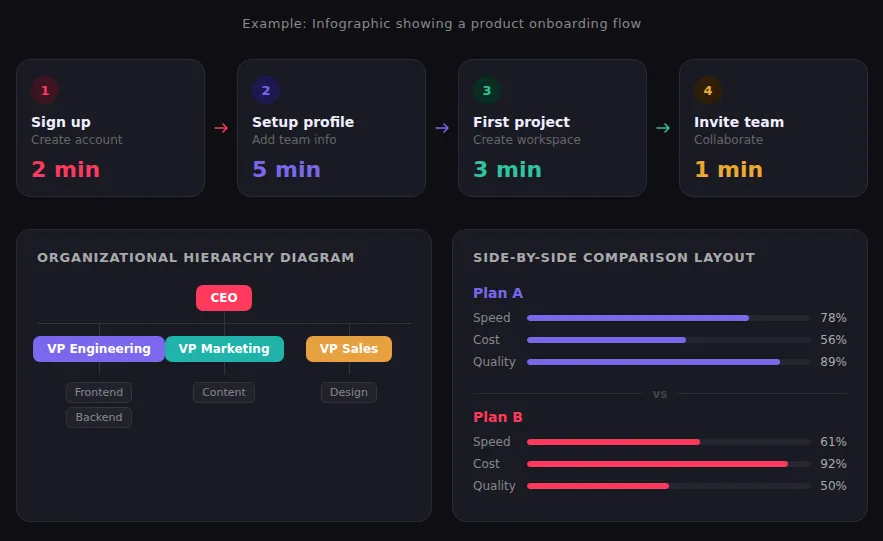
信息圖表 translate complex data or processes into visual formats that audiences absorb quickly. A diagram showing your product's workflow is more powerful than listing steps in paragraphs.

使用 信息圖表 when you're explaining:

  • Process flows or sequences (how your product works, a sales funnel, a decision tree)
  • Organizational structures or hierarchies
  • Comparisons between options or competitors
  • Cause-and-effect relationships
  • Geographic or spatial data

最好 信息圖表 use icons, color, and minimal text to convey meaning. Avoid the temptation to cram every detail into one graphic. Simplicity makes information accessible.

圖表和圖表

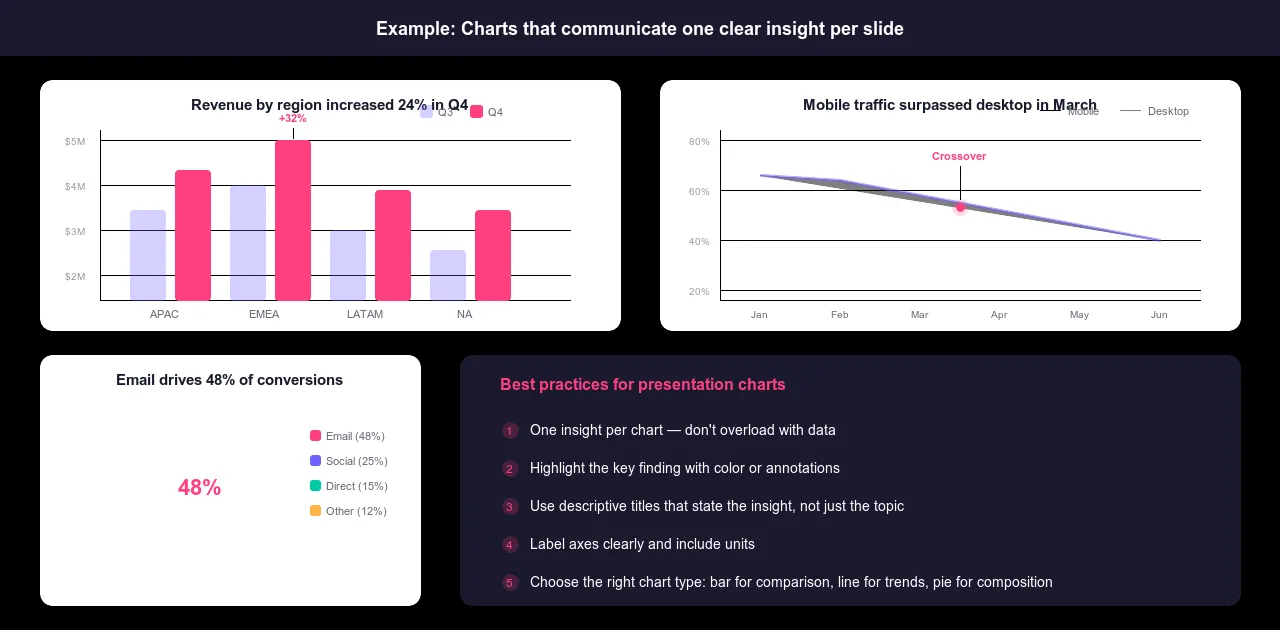
數據可視化 is essential when your presentation contains numerical information. A chart that took you hours to analyze should communicate its insight in seconds to your audience.

Choose chart types strategically:

  • 折線圖 show trends over time. Use them when you want audiences to see how something changes month to month or year to year.
  • 條形圖 compare values across categories. They work well for showing performance by region, revenue by product, or enrollment by department.
  • 餅狀圖 show composition or breakdown. Use them sparingly; pie charts work only when you have a small number of slices and one segment truly dominates.
  • 散點圖 reveal relationships or correlations between two variables. They're less common in business presentations but powerful for showing patterns.

The most common mistake with charts is crowding too much data into one visualization. A single slide should convey a single insight. If you have multiple insights, use multiple charts.

Highlight the key finding. Use color, arrows, or annotations to draw attention to what matters. Label axes clearly and include units. A chart without context is just pretty noise.

視頻內容

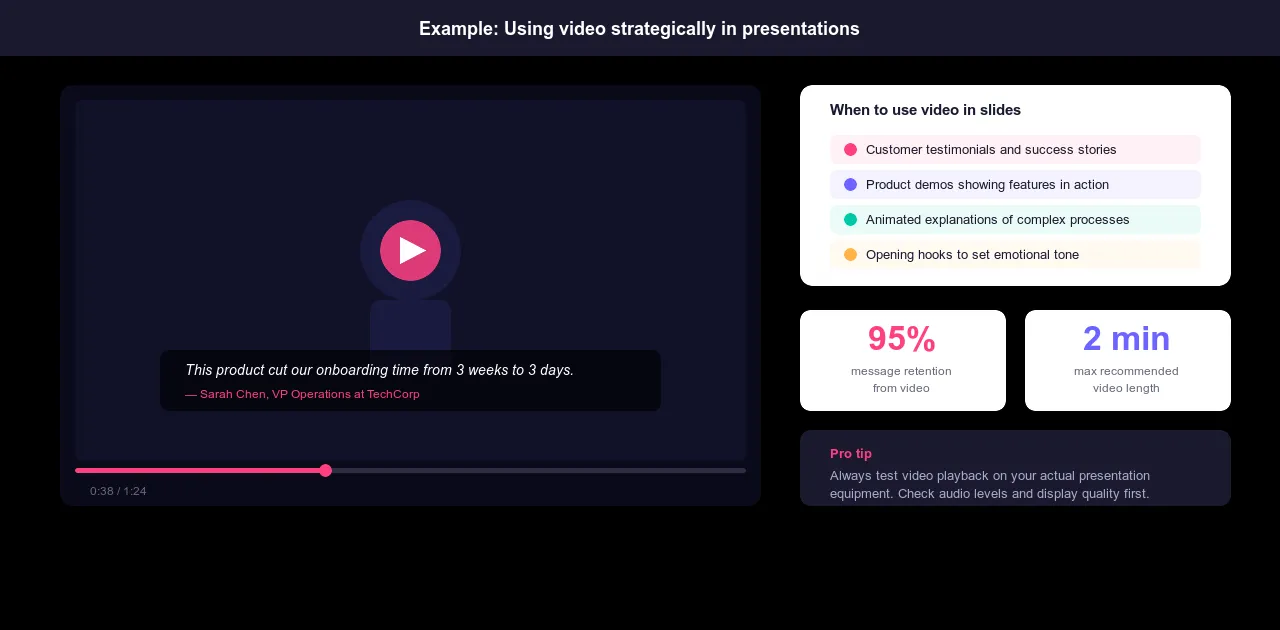
Video is uniquely powerful in presentations. Videos evoke emotional responses and provide context that static images cannot. A customer testimonial video lands differently than reading a quote. A product demo video shows capability more convincingly than screenshots.

Use videos strategically:

  • At the beginning of a presentation to hook attention and set tone with an emotional connection or compelling story.
  • To demonstrate products in action rather than describing features. See the software in use; see the product actually working.
  • To present customer stories or testimonials where hearing someone's voice and seeing their face builds authenticity.
  • To explain complex concepts where animation can show relationships or processes that static slides cannot.

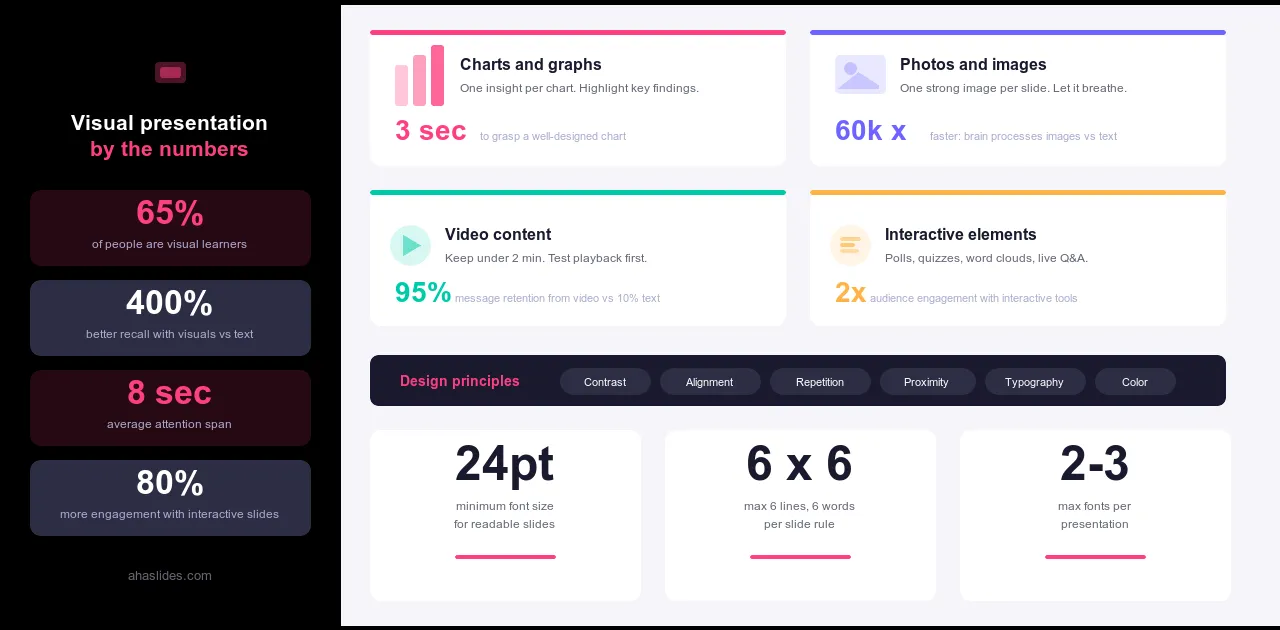
Keep videos brief: 30 seconds to 2 minutes maximum in most presentations. Longer than that and you risk losing the audience's attention. Test video playback on your actual presentation equipment to avoid technical surprises.

Photographs and images

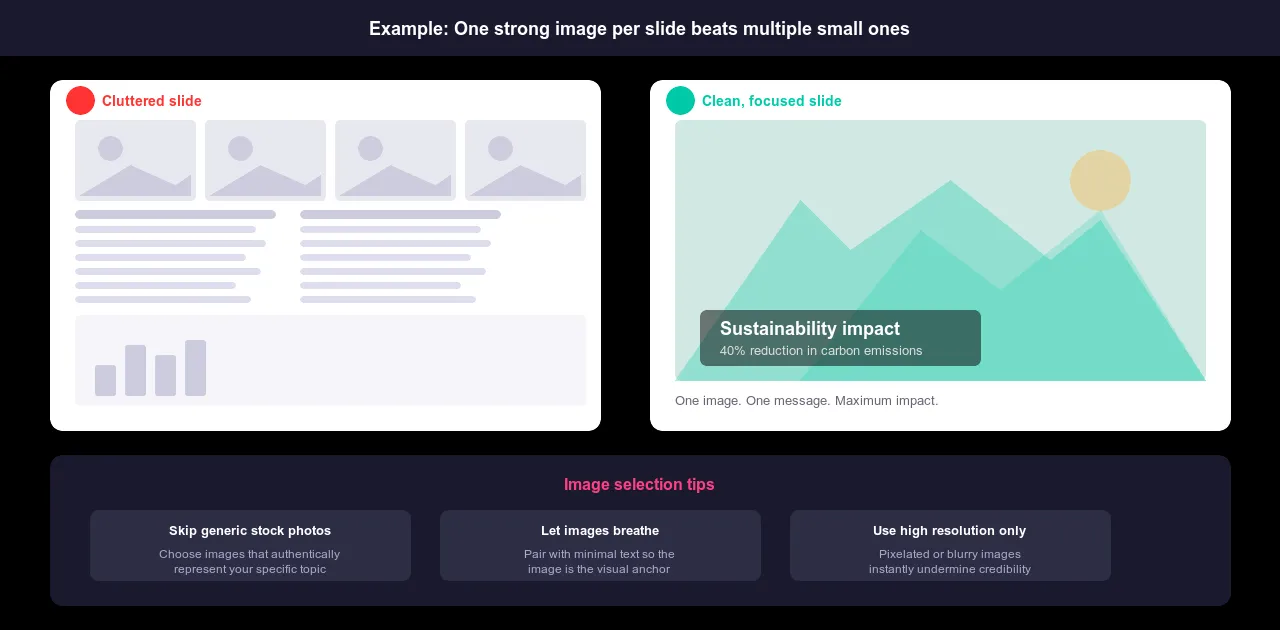
Images make slides more engaging than text alone. However, the wrong image undermines your message. Generic stock photos scream "I didn't care to create something real."

Use original photography or high-quality stock images that align with your message. If you're presenting to a tech audience about innovation, don't use photos of people in business suits high-fiving in a conference room. Choose images that authentically represent your topic.

One strong image per slide works better than multiple small images that dilute focus. Let images breathe on your slides. Pair images with minimal text so they're the visual anchor.

互動元素

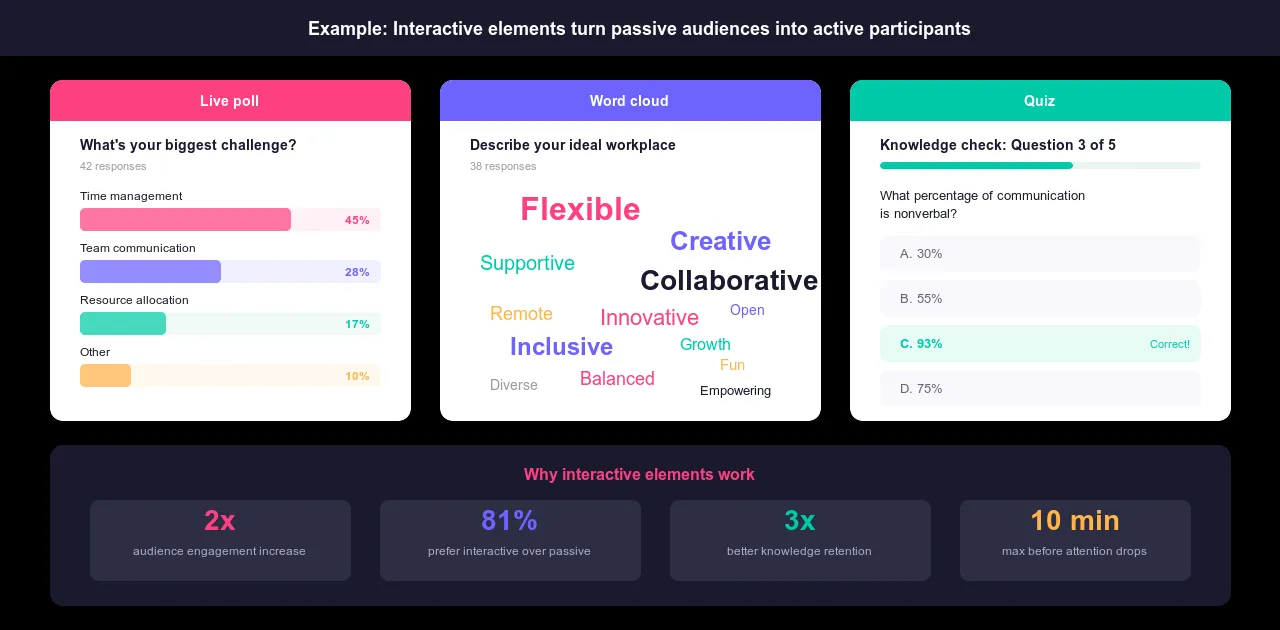
互動 presentations keep audiences engaged rather than passive. Polls, quizzes, word clouds, and live Q&A sessions invite participation and give you real-time feedback about how your message is landing.

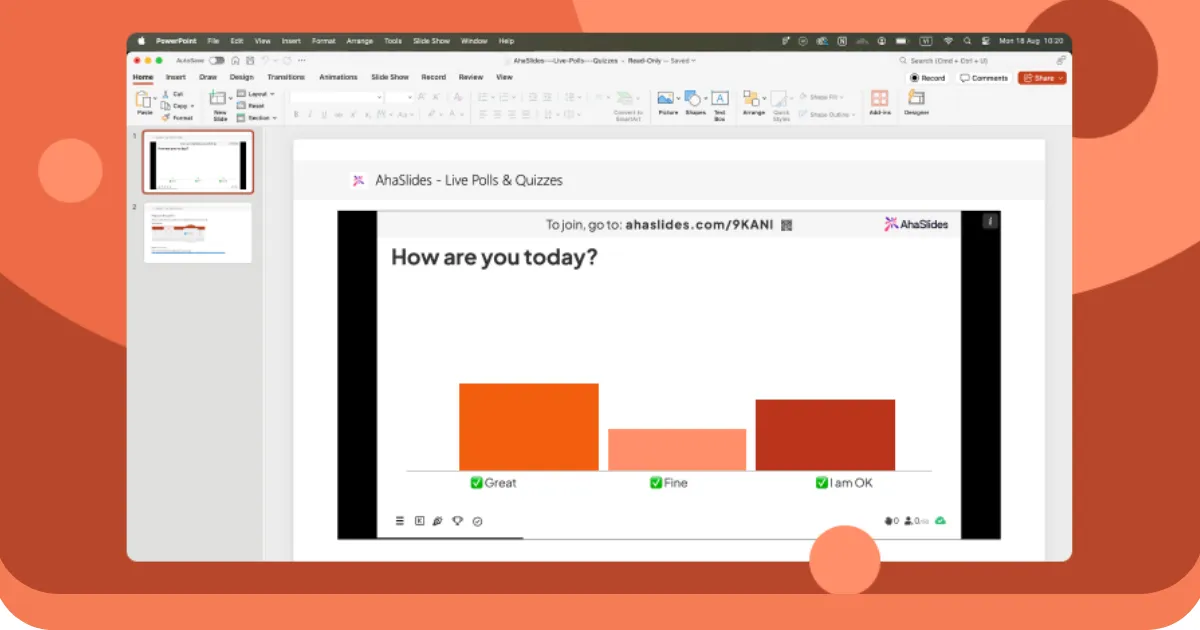
AhaSlides makes adding 互動元素 straightforward. You can embed polls and quizzes directly into your presentation. When audiences vote on a poll or answer a quiz, you get live results displayed on screen, creating energy and engagement that static slides cannot match.

互動 elements serve multiple purposes: they break up presentation monotony, measure audience understanding, and allow audiences to voice opinions and questions in real time rather than sitting passively.


Seven techniques for creating visual presentations that work

1. Focus your visuals on your audience's needs

The same topic demands different visual approaches for different audiences. A presentation about 數據可視化 for researchers looks completely different than the same topic for executives or for business owners new to analytics.

Ask yourself: What does this specific audience need to understand? What level of technical detail serves them? What visuals will they find credible and compelling?

Data scientists want detailed statistical charts and precise methodology explanations. Executives want summary charts showing key performance indicators and business impact. New business owners want approachable explanations of how analytics can solve their specific challenges.

Tailor your visuals to the audience's expertise, interests, and expectations. This alignment between visuals and audience dramatically improves comprehension and buy-in.

2. Use animation and transitions purposefully

Animation gets a bad reputation because it's often overused and distracting. Text that flies in from the sides or spins adds nothing; it wastes time and looks unprofessional.

Strategic animation, however, guides audience attention. If you're revealing a chart element by element to walk the audience through your analysis, animation that appears each element in sequence as you discuss it keeps focus aligned.

Use animation to:

  • Reveal information sequentially rather than all at once, pacing audience comprehension
  • Highlight specific elements within a chart or diagram as you discuss them
  • Show before-and-after comparisons with a simple fade or transition
  • Create movement in slides that otherwise feel static

Avoid animation that's purely decorative. Every animation should serve the presentation's clarity or pacing.

3. Incorporate devices for interactivity

Interactive presentation tools transform passive watching into active engagement. When you pause to ask a question and audiences respond via a poll or quiz, the dynamic shifts. You're no longer presenting at people; you're engaging with them.

AhaSlides and similar tools make this simple. You can:

  • Launch polls with multiple choice or open-ended questions
  • Create quizzes to test understanding or make learning fun
  • Use word clouds to gather open-ended responses and display patterns
  • Open Q&A sessions where audiences submit questions and vote on which ones to address

這些 互動 moments give the audience agency, provide you feedback about understanding, and create natural breaks in your presentation that help sustain attention.

4. Create eye-catching, meaningful titles

Every slide needs a slide title that tells audiences what they're about to see. Vague titles like "Overview" or "Analysis" don't work. Your slide titles should be specific enough that someone could understand the slide's point just from the title.

Instead of "Data," use "Mobile traffic increased 35% year-over-year." Instead of "Process," use "Three steps to implementation." Specific titles set expectations and guide understanding.

Make titles visually distinct. They should be larger than body text and formatted in a way that draws attention. Titles are signposts that help audiences orient themselves within your presentation.

5. Integrate short videos strategically

A 60-second video demonstrating your product can communicate more effectively than five slides of description. A 30-second customer testimonial creates emotional connection in ways text cannot.

Use short videos to:

  • Demonstrate products or services in action
  • Show customer testimonials and success stories
  • Explain processes through animation
  • Inject personality and emotion into otherwise dry topics

Keep videos brief. If it runs longer than 2 minutes, you risk losing the audience. Edit ruthlessly to include only the most compelling content.

Test video playback on your presentation equipment. Confirm that audio works and video quality displays well on your screen. Nothing derails a presentation faster than a video that won't play or displays at poor quality.

6. Use props or creative visual aids

Physical props or creative visual elements add novelty and engagement to presentations. A presenter holding a product creates tangibility that slides cannot. Neon-colored visuals grab attention. Isometric illustrations feel modern and engaging.

Props and creative visuals work best when they're relevant to your message, not just attention-grabbing novelty. A product demo where you hold and interact with the actual product is more powerful than just describing it. Vibrant color in your visual aids matches energetic, creative content better than formal business topics.

Personal stories illustrated with personal photos carry more weight than generic visuals. Vertical layouts or unusual design choices signal that this isn't a generic corporate presentation.

7. Rehearse with your visuals and gather feedback

Visuals need testing. Always test your presentation on the actual equipment you'll use. Does that video play smoothly? Does the text size read from the back of the room? Do colors look right in the room's lighting?

Present to a test audience and ask for honest feedback. Do the visuals enhance understanding or distract? Is any chart confusing? Are videos adding value or eating into presentation time unnecessarily?

Iterate based on feedback. Remove visuals that don't serve your message. Replace unclear charts with clearer ones. Cut videos that don't land. Every visual should contribute to your overall message.


Design principles for visual impact

Effective visual presentations follow consistent design principles:

對比

Use contrast to make important information stand out. Bold key numbers in charts. Use color to highlight significant data points. Contrast makes visual hierarchy clear: audiences know what to focus on.

校準

Organize elements with intention. Text should align to consistent margins. Charts should line up vertically. Organized, aligned design looks professional and intentional. Random element placement looks chaotic.

重複

Consistent visual elements create coherence. Use the same color scheme throughout. Repeat font choices and styling. Repetition makes your presentation feel unified rather than like a collection of random slides.

接近

Group related elements together. Don't scatter bullet points across a slide. Keep titles, content, and supporting visuals grouped logically. Proximity shows relationships between ideas and makes content easier to process.

活版印刷

Text matters even in visual presentations. Use readable fonts at large sizes (minimum 20 points, ideally 24 or larger). Lowercase text reads more easily than all caps. Limit font variety to two or three maximum; mixing many fonts looks unprofessional.

顏色

Color conveys mood and guides attention. Consistent color schemes feel professional. Color used to highlight important data points draws focus. Too many colors fragment attention. Choose palettes with intention and apply them consistently.


What visual presentations avoid

Common mistakes that undermine visual presentations:

  • Text-heavy slides. Slides drowning in bullet points force audiences to choose between reading slides or listening to you. Minimize text.
  • Cluttered charts. Multiple chart types, overlapping data series, or too many categories make charts confusing. One insight per chart works better.
  • Poor quality images or videos. Pixelated, blurry, or low-resolution visuals undermine credibility. Use high-quality assets only.
  • Irrelevant or generic visuals. Decorative elements that don't support your message waste attention. Every visual should serve your core message.
  • 過時的設計。 Presentations using design trends from five years ago feel stale. Stay current with design sensibilities.
  • Oversimplified explanations. Dumbing down complex topics until they're wrong wastes everyone's time. Simplify but remain accurate.

Bringing visual presentations to life

Visual presentations win when they balance clarity with engagement, strategic design with authentic content, and polish with personality.

Your next presentation doesn't need fancy animations or elaborate designs. It needs clear visuals that support your message, help audiences understand, and keep them engaged. Start there.

Choose your visual types intentionally. Design for your specific audience. Test everything before you present. Gather feedback and iterate. These practices transform presentations from forgettable to memorable.

The presentations people remember aren't the ones with the fanciest graphics; they're the ones where visuals and message align perfectly, where every element serves clarity, and where audiences feel respected through thoughtful design.

That's the standard we aim for, and it's absolutely within your reach.

訂閱即可獲得提升觀眾參與度的技巧、見解和策略。
謝謝! 您的提交已收到!
糟糕! 提交表格時出了點問題。

查看其他帖子

AhaSlides 已被福布斯美國 500 大企業所採用。立即體驗互動的力量。

了解更多
© 2026 AhaSlides 私人有限公司